
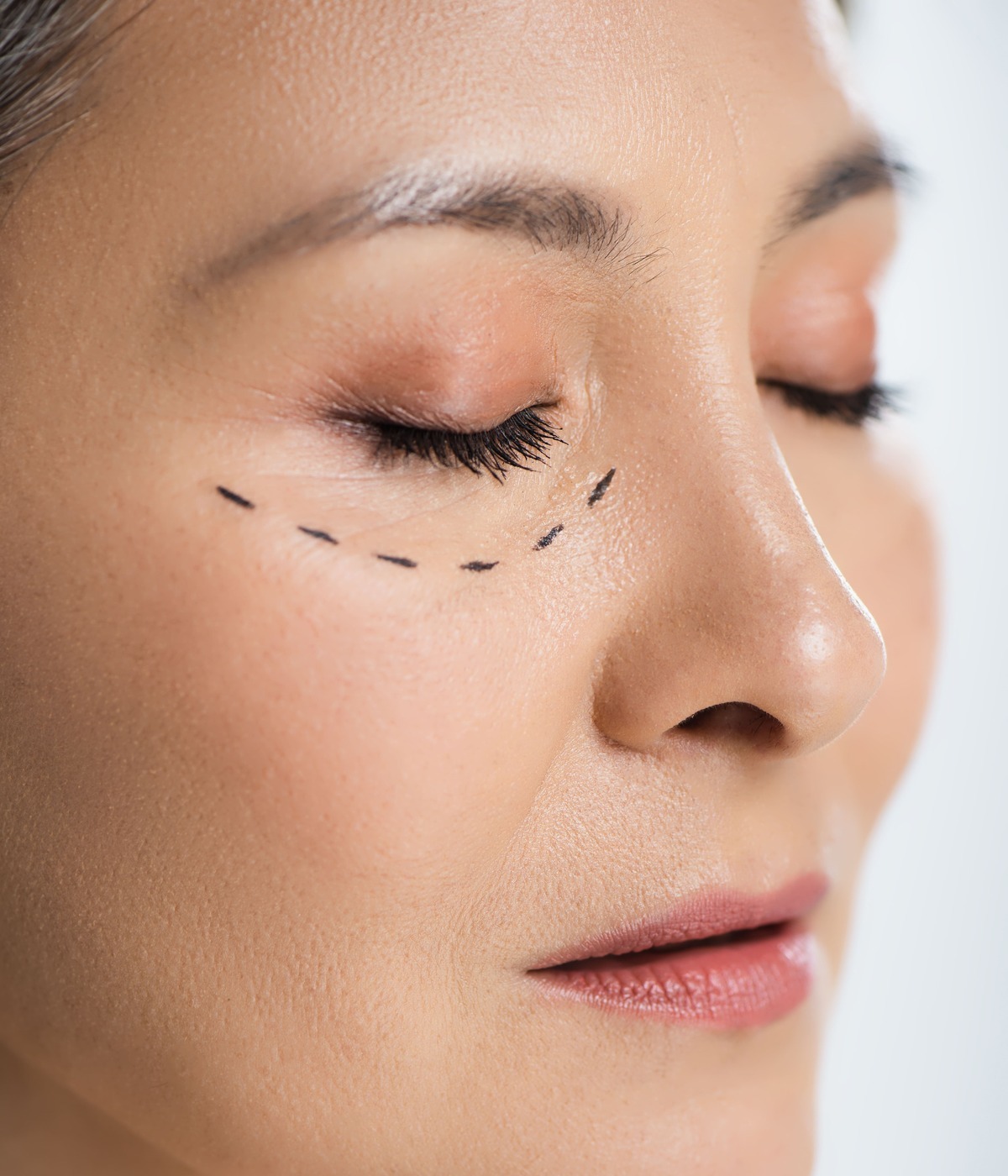
Eyelid Lift
The most subtle change. The most visible difference.
Upper lids. Lower lids. The refinement that changes everything without changing anything.
The eyes set the tone for the entire face. When they look rested, everything else follows. One session — often combined with a MILA for a fully refreshed result.
WHY IT MATTERS
Why the eye area ages differently.
The skin around the eyes is the thinnest on the face. It loses elasticity faster than any other area. The result is a set of aging signs that are disproportionately visible — and that don't respond to non-surgical treatment in a meaningful way.
Blepharoplasty. The clinical name for eyelid surgery. When the eyes look rested, the entire face reads differently. No other procedure delivers that change with the precision and permanence of surgery.
WHAT IT ADDRESSES
Four concerns. One precise correction.
Upper Eyelid Hooding
Excess skin that descends over the upper lid, creating a heavy, tired, or aged appearance. In more significant cases, hooding can physically reduce the visual field. Upper blepharoplasty removes the excess through an incision concealed in the natural eyelid crease.
Lower Eyelid Puffiness
Herniated fat pads beneath the eye create persistent puffiness that no amount of sleep resolves. Lower blepharoplasty addresses the fat directly. Through a transconjunctival incision — no visible scarring when possible — for a rested, smooth result.
Under-Eye Hollowing
Volume loss beneath the eye creates a shadowed, hollowed appearance that reads as fatigue. Fat repositioning during lower blepharoplasty can address this concurrently, restoring gentle fullness without the overfilled look of repeated filler.
Fine Lines at the Outer Eye
Crepey skin texture at the outer corners and below the lower lid can be addressed in combination with blepharoplasty or with laser resurfacing for patients with significant surface texture concerns.
Rested.
Not altered.
RECOVERY
What to expect after eyelid surgery.
Eyelid surgery has a shorter recovery than a facelift. Swelling and bruising are most visible in the first five days and improve noticeably by the second week.
Days 1–3
Cold compresses and rest. Eyes feel tight; swelling is most pronounced. Avoid reading, screens, and contact lenses. This is the most uncomfortable phase, and it passes quickly.
Days 4–7
Suture removal for the upper lid, or a first post-operative assessment. Bruising is yellowing and fading. Most patients are comfortable with concealer covering residual discoloration by the end of this week.
Weeks 2–3
Return to social activities and light work. Residual swelling continues to reduce. The eyes begin to show the result clearly.
Month 1–3
Full result visible. Incision lines, where present, fade from pink to skin-tone. Most patients report they look noticeably more rested — without looking done.
FREQUENTLY ASKED
Eyelid lift. Common questions.
Am I a candidate for eyelid surgery?
Most patients between 40 and 70 with upper eyelid hooding, lower eyelid puffiness, or under-eye hollowing are candidates. Candidacy is assessed at consultation. Your surgeon evaluates skin quality, fat distribution, and whether eyelid surgery alone or combined with other procedures would best address your concerns.
Will I have visible scars?
Upper eyelid incisions are placed in the natural lid crease. Essentially invisible when your eyes are open, virtually undetectable when closed. Lower eyelid incisions, when required, are placed directly below the lash line or internally via the transconjunctival approach. Scarring is minimal and fades significantly within six months.
Can eyelid surgery be combined with the MILA Facelift?
Yes. The two procedures are frequently combined in a single session. The MILA Facelift addresses the mid and lower face; the eyelid lift addresses the upper third. Recovery timelines overlap. The combined recovery is not significantly longer than either procedure alone.
How much does an eyelid lift cost?
Upper lids only, lower lids only, and combined upper and lower procedures are each available as distinct offerings at separate price points. Pricing also varies based on whether the procedure is standalone or combined with a facelift. All pricing is provided in writing at your consultation before any commitment is made. There are no estimates or ranges at MILA.
How long do eyelid lift results last?
Upper blepharoplasty results typically last 10 to 15 years. Lower blepharoplasty results for fat repositioning are considered permanent — fat herniation does not typically recur. Skin continues to age naturally after the procedure, but from a significantly improved baseline.
Will I look surprised or unnatural?
Not with a well-executed procedure. The goal is to remove the excess that creates heaviness or puffiness while preserving the natural shape of the eye. Over-resection produces the surprised look. MILA surgeons calibrate conservatively. The result reads as rested. Not altered.
Continue Your Research
THE FULL PROCEDURE
The MILA Facelift
The procedure most often combined with an eyelid lift. Full structural correction of the face and jaw.
Read More →
ENHANCEMENT
Neck Lift
Jawline definition. Profile transformation. Often discussed alongside an eyelid lift at consultation.
Read More →
NEXT STEP
Book a Consultation
Complimentary. Our concierge team guides you from first inquiry through your procedure and recovery.
Read More →
The eyes say everything. Let's make sure they say the right thing.
Your consultation is complimentary. Your surgeon assesses whether eyelid surgery alone — or combined with a MILA — is the right approach. You'll leave with clear answers and transparent pricing, in writing.
Book a Consultation